|
 INTEGRATED ANNUAL REPORT 2012 |


Interview with joint CEOs
 |
“If it can be digitised, it can be distributed by us, hence people call us the ‘world’s virtual railroad – everywhere, anytime’.” |
 |
||
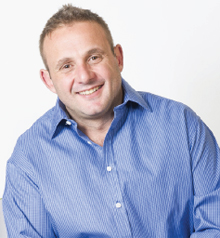
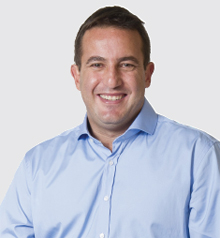
| Brett and Mark Levy, joint CEOs |
Q. What does Blue Label do?
We consider ourselves a lifestyle enabler, as through the deployment and utilisation of a growing number of various types of distribution devices and technologies, we are able to deliver the products and services we sell in the most cost effective and efficient way. If it can be digitised, it can be distributed by us, hence people call us the ‘world’s virtual railroad’, as we deliver various secure electronic tokens of value and services. After building the tracks (integrations and points of sale), we can put as much traffic onto them as the market requires, in that incremental traffic attracts limited additional cost, given the sunken expenditure already incurred on these tracks. In essence, we say that airtime has built the tracks for us, so the profits on any additional products or services, such as electricity, financial services etc, drop straight to the bottom line, with no major incremental costs.
We like to borrow a statement from Mark Zuckerberg of Facebook. “We don’t build services to make money; we make money to build better services.”
Q. Please explain the virtual railroad construction analogy you sometimes use to describe the Blue Label business model?As background, Warren Buffett, the long-term value investor, has for years been acquiring stakes in the US railroad systems, maintaining that railroads are a key economic indicator through the amount of merchandise that they haul. They are cost effective and environmentally friendly and will increasingly continue to be the mode of transportation of goods over the years to come. So too, do we think that railroads represent the future. They are best positioned to haul raw materials and goods for a growing economy, and whatever people bring to the trackside, trains can be readied to haul it. This is true whether you speak to a physical or a virtual world. In Blue Label, we capture this in our strategy: we roll out a myriad of different touch points, being the tracks, for the distribution of goods and services, with a focus on emerging markets. We believe that where we have already created the railroad, our products and services are in demand.
Q. In general, what makes a good business proposition?It is relatively easy to start a small business, but it takes a lot more to make it a great business. We like the example of starting out with one product generating, say R6 million per year. Additional products attract no further sunken costs and therefore earnings filter straight to the bottom line. Increase this to ten products and you soon have a R60 million per year enterprise. In short, start small, think big, and do a managed and controlled scale-up over time!
Life is a bit like that as well. That extra mile you put in is usually filled with additional opportunity, especially if you’re the only one in that space.
Q. How do you make the joint CEO role work effectively?Each of us has his own assigned areas of responsibility, and we have a lean and flat organisational structure, which delegates high levels of responsibility to our management team.
Q. How did Blue Label perform in the year under review?All segments put in a strong performance – as each is well managed. A solid foundation has been built, which rebases the platform for delivering another good performance next year. SA Distribution continued to grow, including a pleasing increase in commissions earned on prepaid sales on behalf of the utilities. The exponential rollout of smart meters by the municipalities, being awarded additional contracts with municipalities and customer awareness to the benefits of controlling their own utility spend, all contributed to the growth in this form of revenue.
We should not look only at turnover or sales as the only proxy for our group performance, as there is an increasing shift to sales in which we act as the agent and not the principal. This enhances gross profit margin, without reflecting fully in turnover growth.
In the international segment, the performance from Oxigen India was pleasing, as it finally turned profitable. The POP rollout in Mexico continues to accelerate, which augurs particularly well for the future of this venture and our prospects in the Americas, albeit that the company incurred accelerated losses in this process.
Q. What keeps you awake at night?As we are moving more and more to becoming a technology driven company, we employ a high number of specialists. Consequently, there is an overarching need across the group to identify, develop and retain talented and skilled resources. We address this in various ways, including training.
Q. How do you go about identifying the risks to sustainability?We are committed to running our business sustainably, and the board oversees this approach by ensuring rigorous risk assessments. This year the procedure was refreshed to include engaging with the group’s subsidiaries in workshops to prioritise their top risks, establish inherent risks, implement controls and consider mitigating actions to arrive at the residual risk exposure.
Q. And your thoughts on climate change?We acknowledge the interdependence of profits, people and the planet, the 3P Principle. We are committed to being a positive influence on climate change through the support of relevant activities aimed at reducing any harmful impacts. We believe that the responsible use and management of natural resources are integral to the sustainable development of our 3Ps. Due to the nature of our business our environmental impact is classified as low, but we endeavour to play our part in increasing energy efficiency and reducing carbon emissions. We do ‘begin at home’, aligning with the national call to conserve scarce resources in supporting staff-awareness campaigns e.g. on water and energy consumption.
Q. What makes an entrepreneur?A number of traits characterises us and it’s probably no coincidence that we see these in many of the people surrounding us. These include ‘nothing is impossible’ and a ‘can do attitude’. We are often asked to address groups of entrepreneurs, where ‘what makes an entrepreneur?’ is an FAQ. Our key thoughts usually cover:
Attitude: we should not be scared to fail, but
we also shouldn’t accept failure as an option.
If we do fail, we need to learn from it;
Will: the will to get up and continue when you
fall down. It is true that successful people
control their own destiny;
Spirit: we don’t easily accept ‘no’ or ‘I can’t’,
and we like being able to see a perspective or
an angle which other people don’t see; and
Vision: entrepreneurs have to constantly
explore innovation in order to be one step
ahead of the game.
| Brett Levy | Mark Levy | |
| Joint chief executive officers | ||
| ^back to top |